
49ers Coach With Aggressive Myeloma Gets New Treatment at UCSF
- Patient Care
- Patient Story
- Research & Innovation
Story highlights
- 49ers coach Johnny Holland is battling multiple myeloma and part of a UCSF clinical trial.
- The trial’s immunotherapy has kept his cancer in check.
- His symptoms were previously mistaken for normal aging, delaying diagnosis.
- He continues coaching while raising awareness and supporting research.
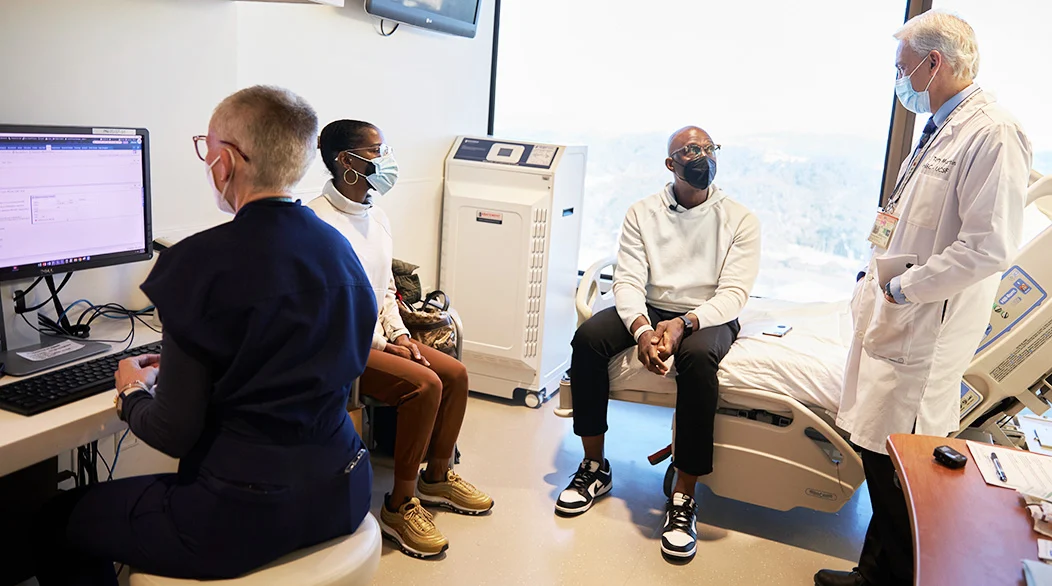


Johnny Holland has faced fierce foes for decades, first as a standout tackle in the National Football League, then as a beloved coach with the San Francisco 49ers. But when it comes to being poked by a nurse with a needle, the gridiron warrior shuts his eyes and scrunches his face.
"No matter how many shots I get, it always makes me jump," he said, grinning.
Johnny Holland has faced fierce foes for decades, first as a standout tackle in the National Football League, then as a beloved coach with the San Francisco 49ers. But when it comes to being poked by a nurse with a needle, the gridiron warrior shuts his eyes and scrunches his face.
"No matter how many shots I get, it always makes me jump," he said, grinning.
An inspirational role model to a legion of professional football players, Holland, 58, has an aggressive form of multiple myeloma – a blood cancer that develops in plasma cells, a type of white blood cell. For the last two years, he's participated in a groundbreaking clinical study at UCSF Health, testing a combination of medications that have kept the cancer at bay.
Holland, who helps guide the 49ers defense as the team's linebackers coach, is sharing his medical journey to raise awareness about the disease. Multiple myeloma, also called plasma cell myeloma, is among the most common blood cancers, with approximately 36,000 new cases diagnosed annually in the United States, according to the American Cancer Society.
The body generates too many cancerous plasma cells in myeloma, crowding out the normal cells that fight infection. These malignant plasma cells produce abnormal antibodies that do not fight infection and can cause other complications, such as damage to bones. It’s a serious disease with unknown causes, but advances have resulted in longer survival rates and improved the quality of life for patients.
"I tell Johnny and my other patients, we have numerous medical options we can try – we have something in the left pocket, and if it doesn't work, we have something in the right pocket that we can try next," said Holland's physician, Dr. Thomas G. Martin, a leading expert in hematology-oncology and associate director of the myeloma program at UCSF Health, as well as the clinical research director of hematologic malignancies at the UCSF Helen Diller Family Comprehensive Cancer Center. "We always have something coming down the pipeline to help patients."
Latest weapons to battle cancer
Therapies, ranging from chemotherapy and radiation to stem cell transplantation and immunotherapy, can relieve symptoms and prevent complications. UCSF specialists also test novel treatments – such as the ones in the clinical trial that Holland joined – for patients with newly diagnosed myeloma or relapsed or progressive myeloma. Holland's trial, which included immunotherapy, uses various cellular treatments to rev up the body's own immune system to fight the cancer.
"These immunotherapy treatments, including CAR-T therapy and bispecific antibody therapy, are the wave of the future for cancer care," said Samantha Shenoy, a UCSF Health nurse practitioner who regularly meets with Holland. "Our research is helping to bring hope to patients and is improving outcomes for them."
Of concern is the rising, disproportionate impact of myeloma – currently 1 in 5 patients diagnosed with the disease in the U.S. is Black, said Martin. Much remains unknown about the disease and why it's affecting Black people so significantly.
One way to unlock answers is through more clinical studies involving people from a diversity of races. That's why Holland's participation in the multiple myeloma clinical study is especially valuable, said Shenoy. "Ensuring clinical diversity is important for advancing health equity," she said.

Multiple myeloma is a blood cancer that affects the bone marrow, bones, kidneys, and immune system. Advances in treatment are helping patients live longer and feel better. Here’s the quick overview:
What it is: A blood cancer that affects plasma cells, weakening your bones, kidneys, and immune system.
Who’s at risk: Most common over age 65, higher risk for Black people, and linked to certain chemical/radiation exposures.
Signs to watch for: Bone pain, frequent infections, tiredness, weight loss, or kidney problems.
Hospitals
 |  |  |
| Sonoma Valley Hospital | MarinHealth | Chinese Hospital |
Women and children
|  |  |  |
| MarinHealth | One Medical | Providence | Community Regional Medical Center |
 |  |  | |
| Community Hospital of the Monterey Peninsula, Montage Health | Natividad | Washington Health |
Physcian networks



Watch the story